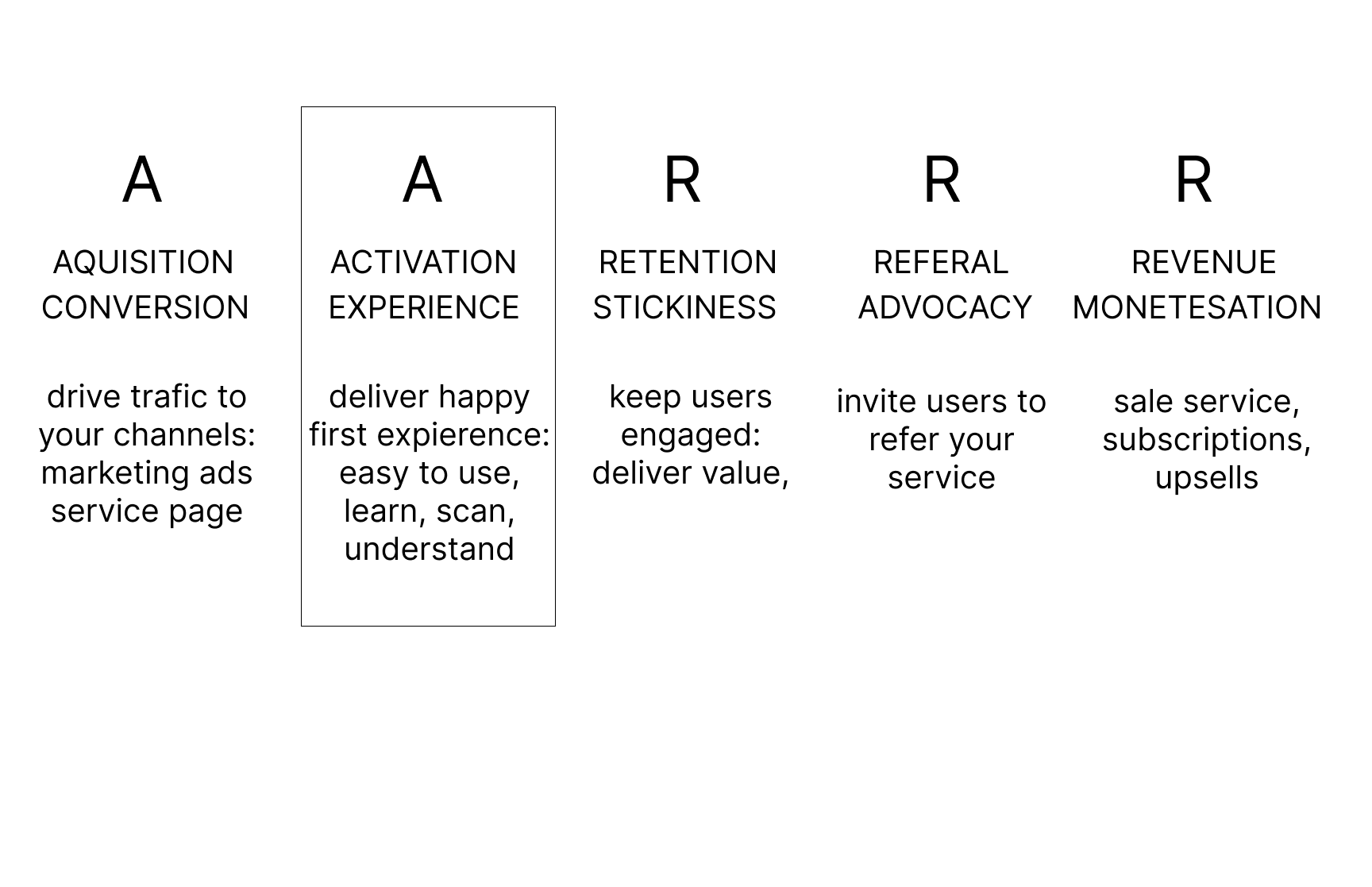
We align on Vision, framing, Outcome and shared Problem/Goal:
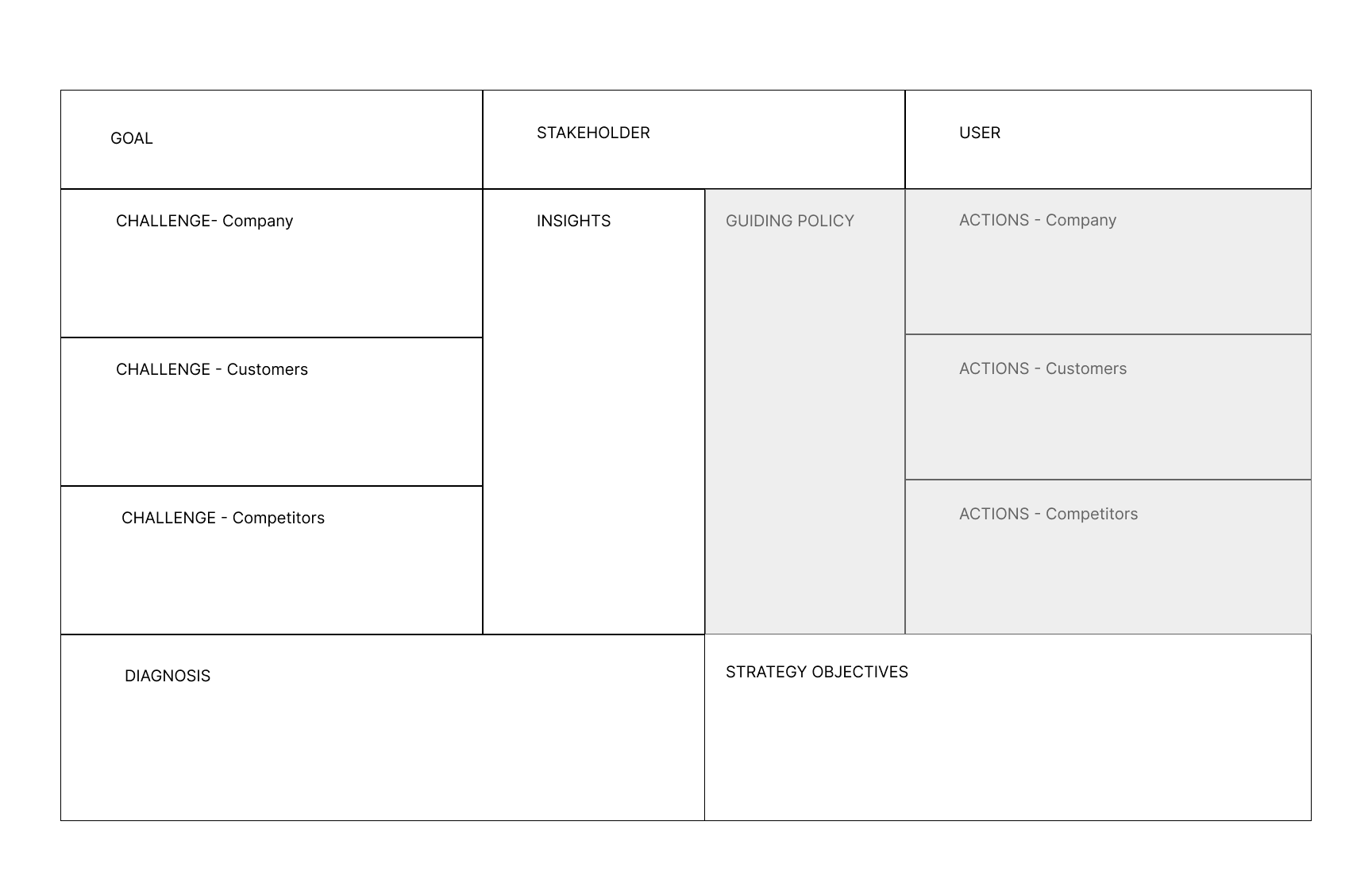
With the strategy canvas
and lean ux' we define assumptions and challenges'
- 01.1. Whats the WHY: Vision/Mission/Goal of your Business ? [+]
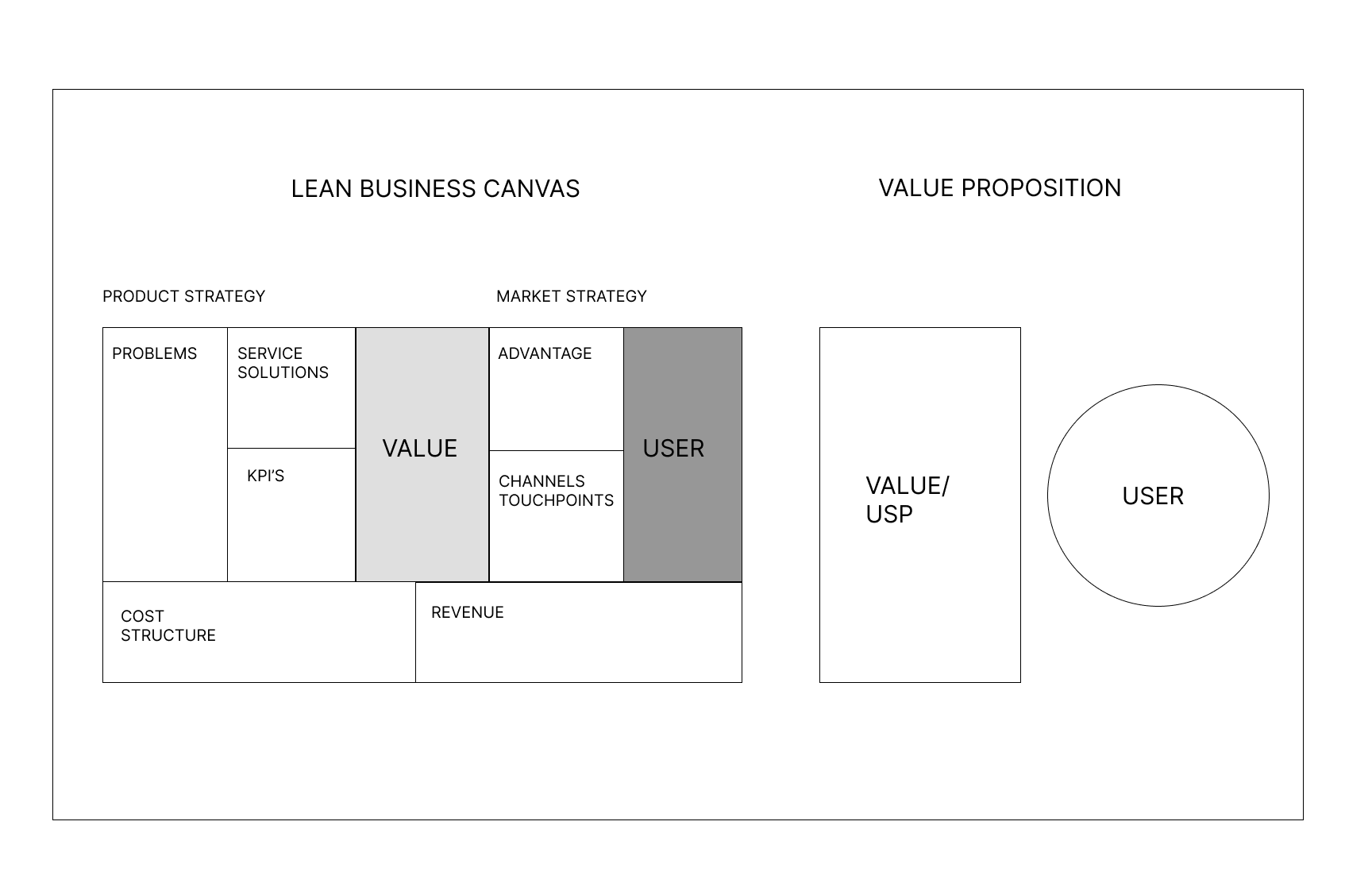
- 01.2. What is the WHAT: your current Business Model BMC ? [+]
- 01.2. What assumptions CEO/PM/Stakeholder have for the project Problem and Goal ? [+]
- 01.3. What are the known hypothesis/insights? - 3C's ? [+]
- 01.4. What have beeen past attemps to fix this issue? [+]
- 01.5. What is the desired outcome ? or explicit request ? [+]
- 01.6. What are guiding policies? to improve that product? Service? [+]
- 01.7. We gather, brainstorm and align the team/stakeholder on a shared problem/ main priorities? [+]
- 01.8. We Define "now-next-future” Actions to iterate on those challenges [+]
- >>>> 2.280€ / 1 Month
Why Strategy is important? (we challenge assumptions, solve user problems and meassure performance and drive results to contribute to business impact, and callibrate what is needed to reach your GOAL) 01.1 “We help [target audience] achieve [goal/outcome] through [product/service/value].” In UX practice, the “mission” is typically articulated as a problem-oriented, user-centered objective, not a vague vision statement. A strong opening question anchors the entire discovery phase. [] WE HELP AUDIENCE, THROUGH OUR SERVICE or PRODUCTS, TO ACHIEVE XYZ Define Assumptions to specify a Scope 01.2 “Service Cost Structure” Positioning: “What problem are we solving, for whom, and why is it relevant?” Company: Rational / Emotional promise? Business Goal: What is the desired expected Outcome ? delivered Value ? 01.2 “We think ..., therefore..” Assumption: “What problem are we solving, for whom, and why is it relevant?” Business Goal: What is the desired expected Outcome ? Signals we seek ? 01.3 What are the known insights ? Do we have insights yet? We can start with assumption, but...we need to proof our Value proposition If those Insights are not clear, we cannot define meassurabel results. Book a UX Discovery Audit (Desk research, Journey Analysis, Screen Audit..) to get a clear ROI. Understand what is diserable, feasable, viable ? Users & Context: Who are the primary and secondary users? Root Cause: In what context do they experience the problem? Pain Points: What specific frustrations or inefficiencies exist today? How are users currently solving this (workarounds)? Motivation: Why is this problem worth solving now? Kano Model: Prioritizing Customer Satisfaction and Delight 01.7 We align on a shared problem/ main priorities? We gather Stakeholder to collect feedback, or constrains on the insights and to align on the problem. We can synthesize answers into something like: “We aim to help [user group] achieve [goal] by addressing [key problem], resulting in [measurable outcome].” Avoid “We want to build an app that…” ❌. Instead start with: “Users struggle to…” ✅ [+] KICKOFF roadmap planning [+] RACI STAKEHOLDER map [+] ALIGN STAKEHOLDER on a problem What connect business wishes with customer realities?
- read more about the steps and detailed process -

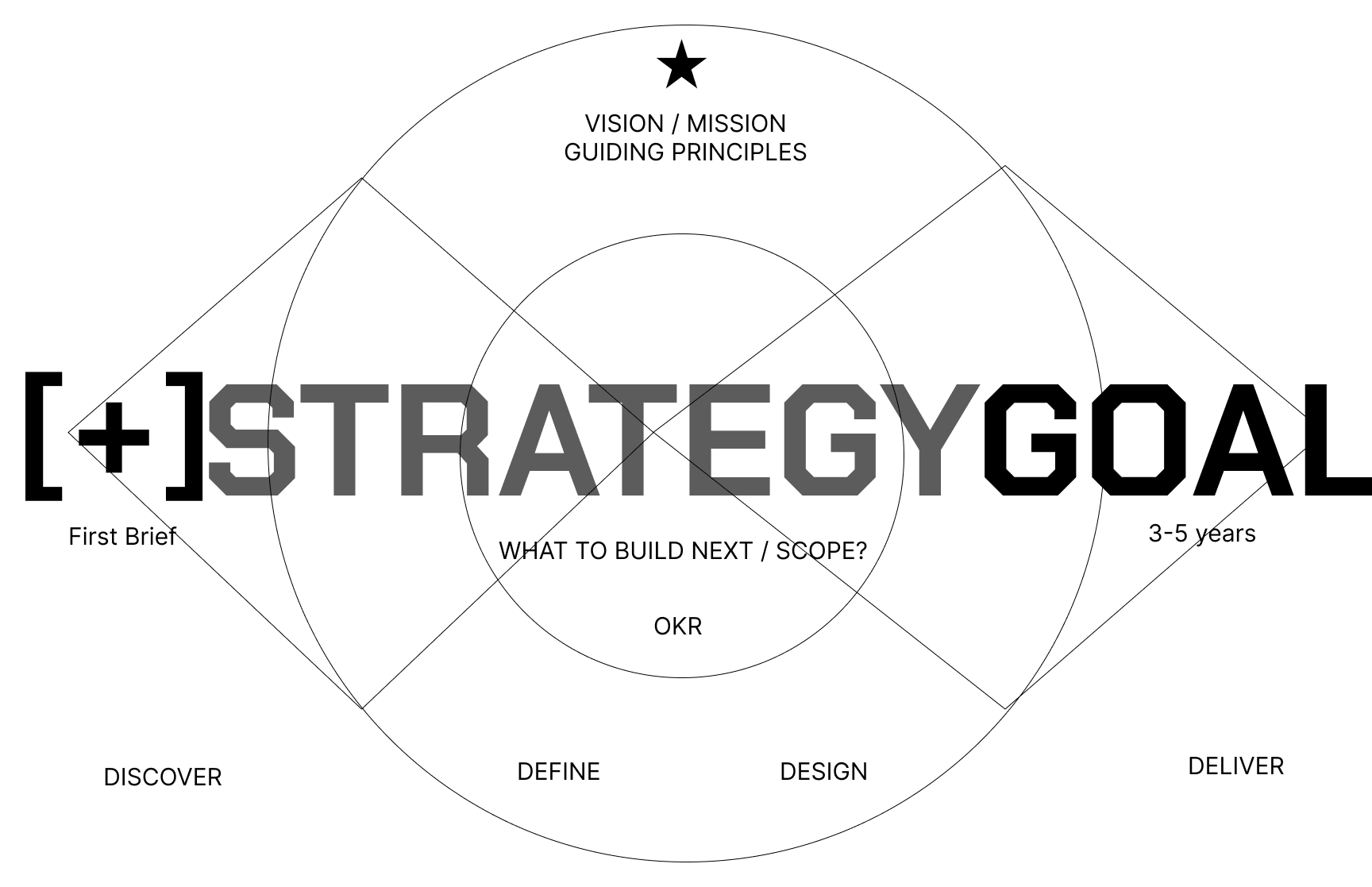
With the foundational framing question we start every
UX design project.What is the Mission of your Business ?
What is your Business Model proposed Value Proposition or Service offer?
Positioning?
Promise?
What is your Assumption or Business Challenge of your project request?
Assumptions?
Problem?
Concerns?
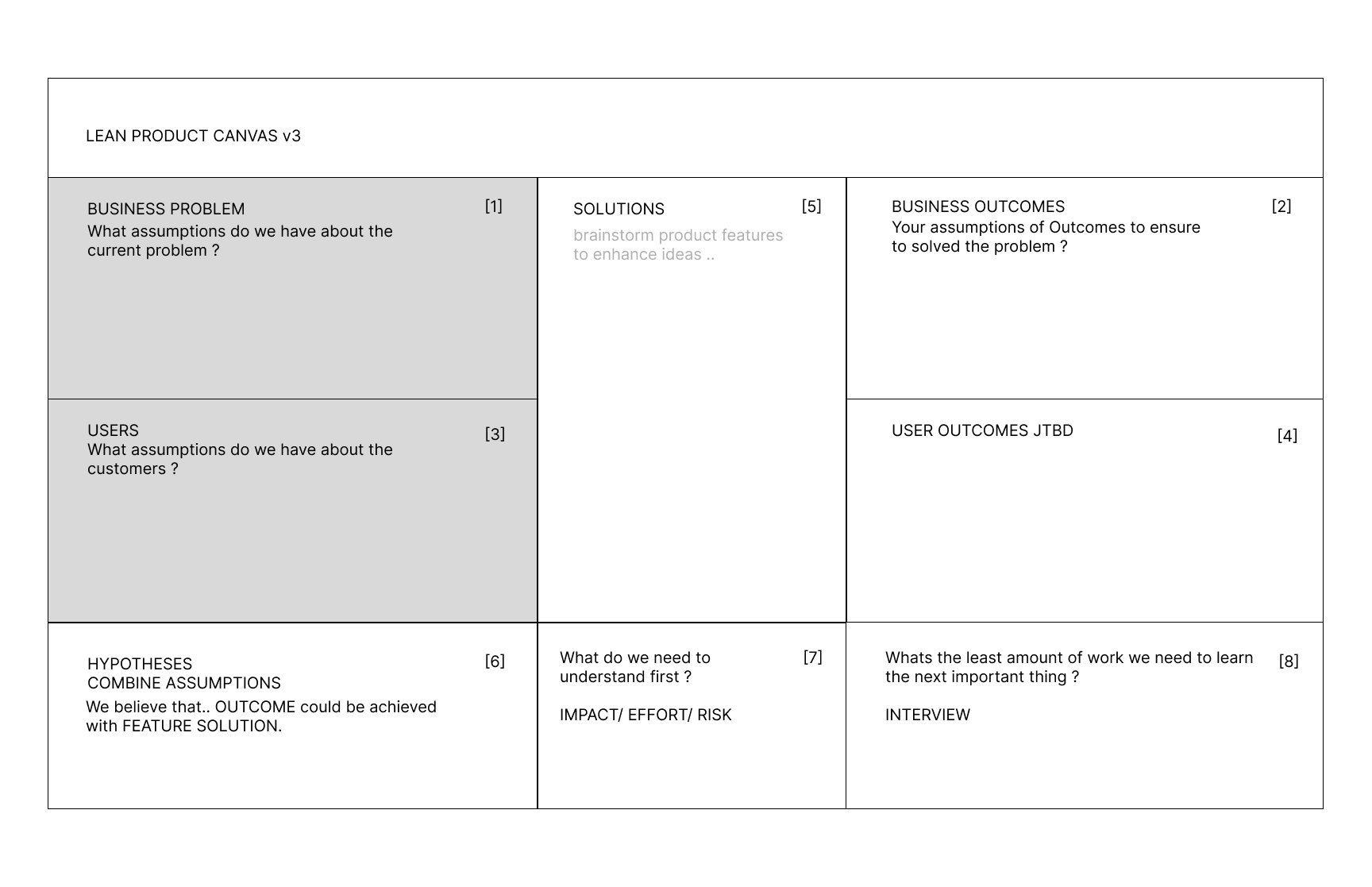
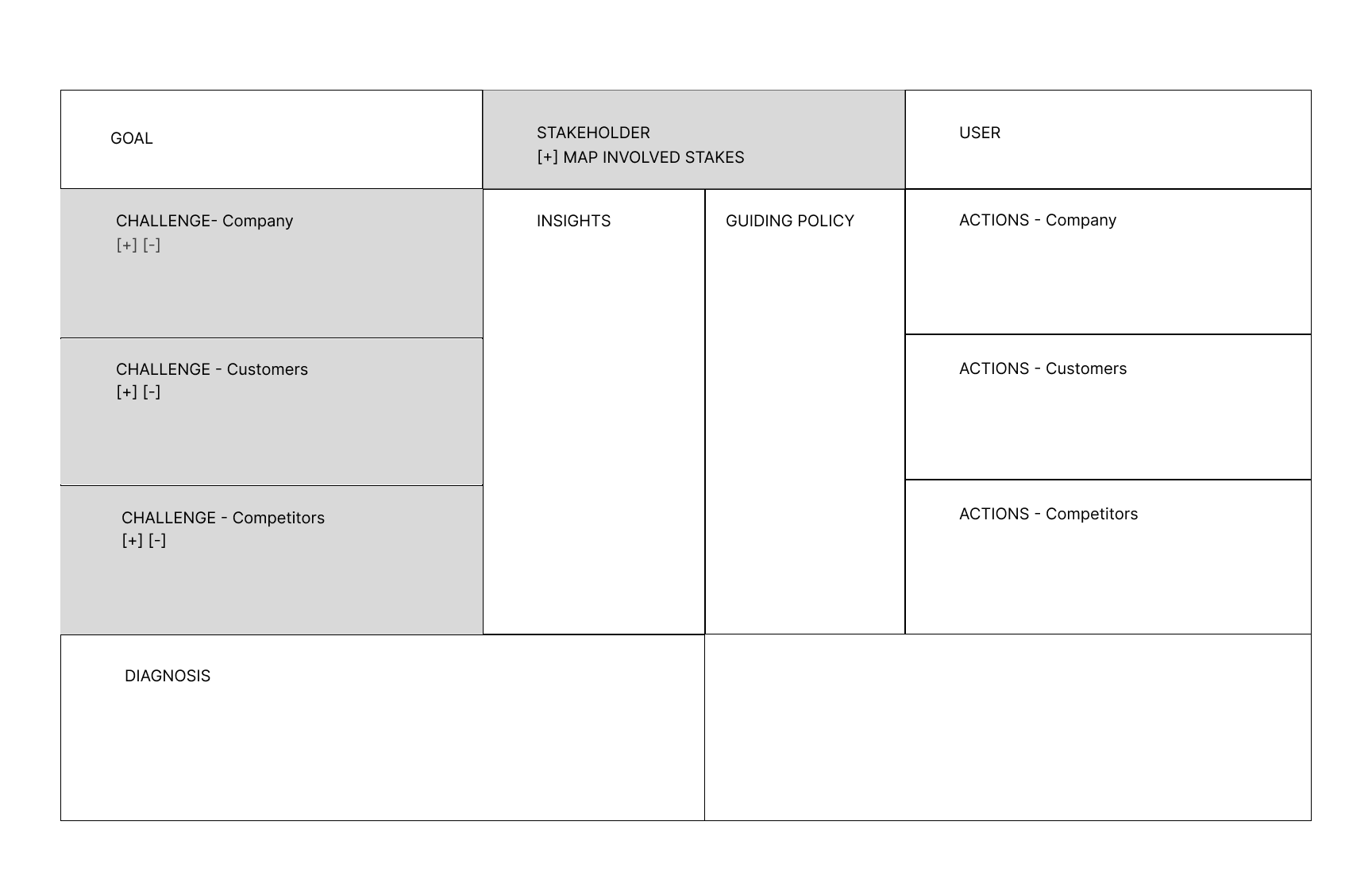
We create a compelling diagnoses problem statement for your project goal.
What is the
known problem
area?
Do we have analytics?
Do we have research reports?
Do we have all 3C's ?
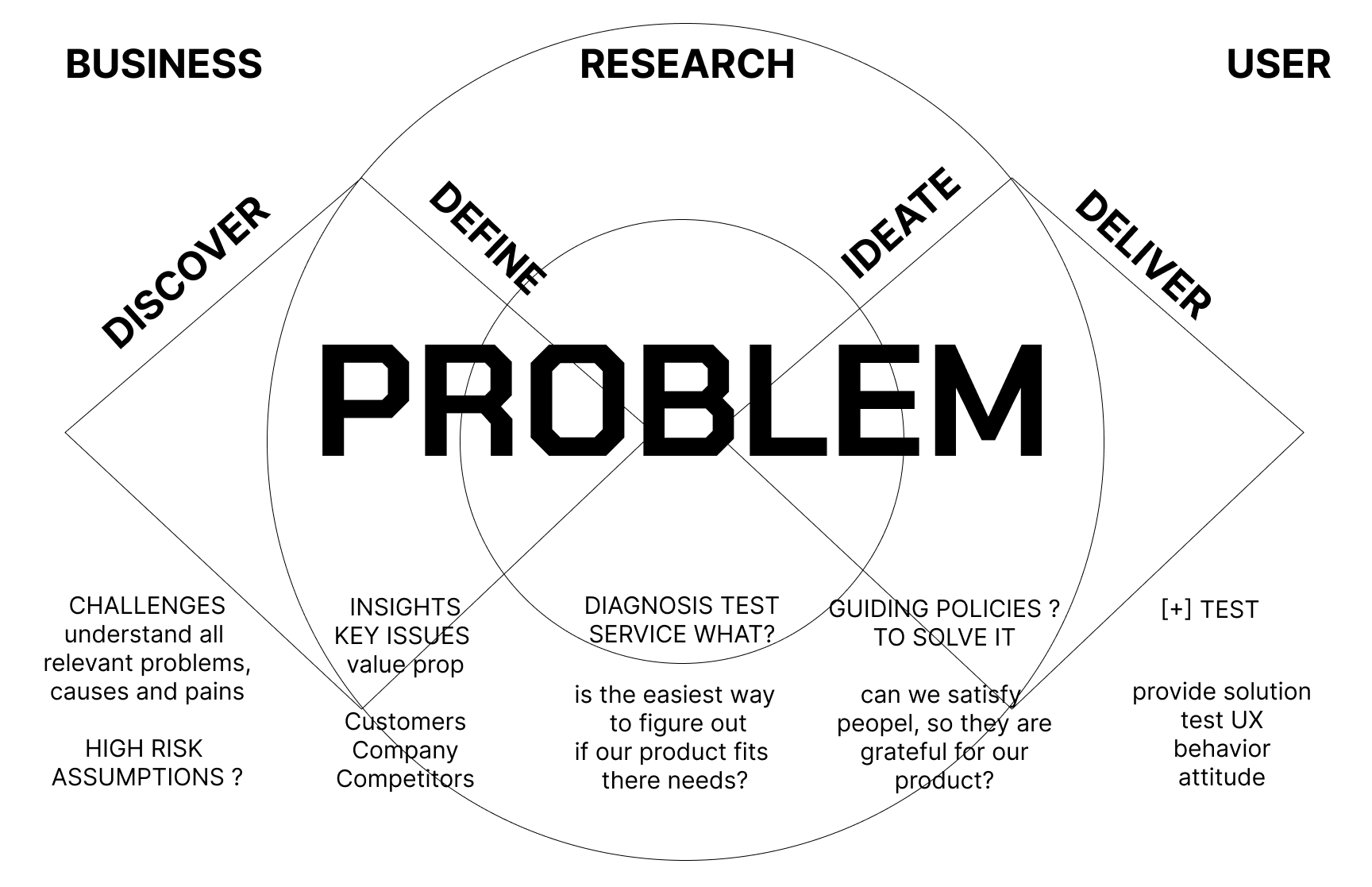
With Insights, we Expand the mission into action milestone steps supporting the business goal,
What are the known insights?
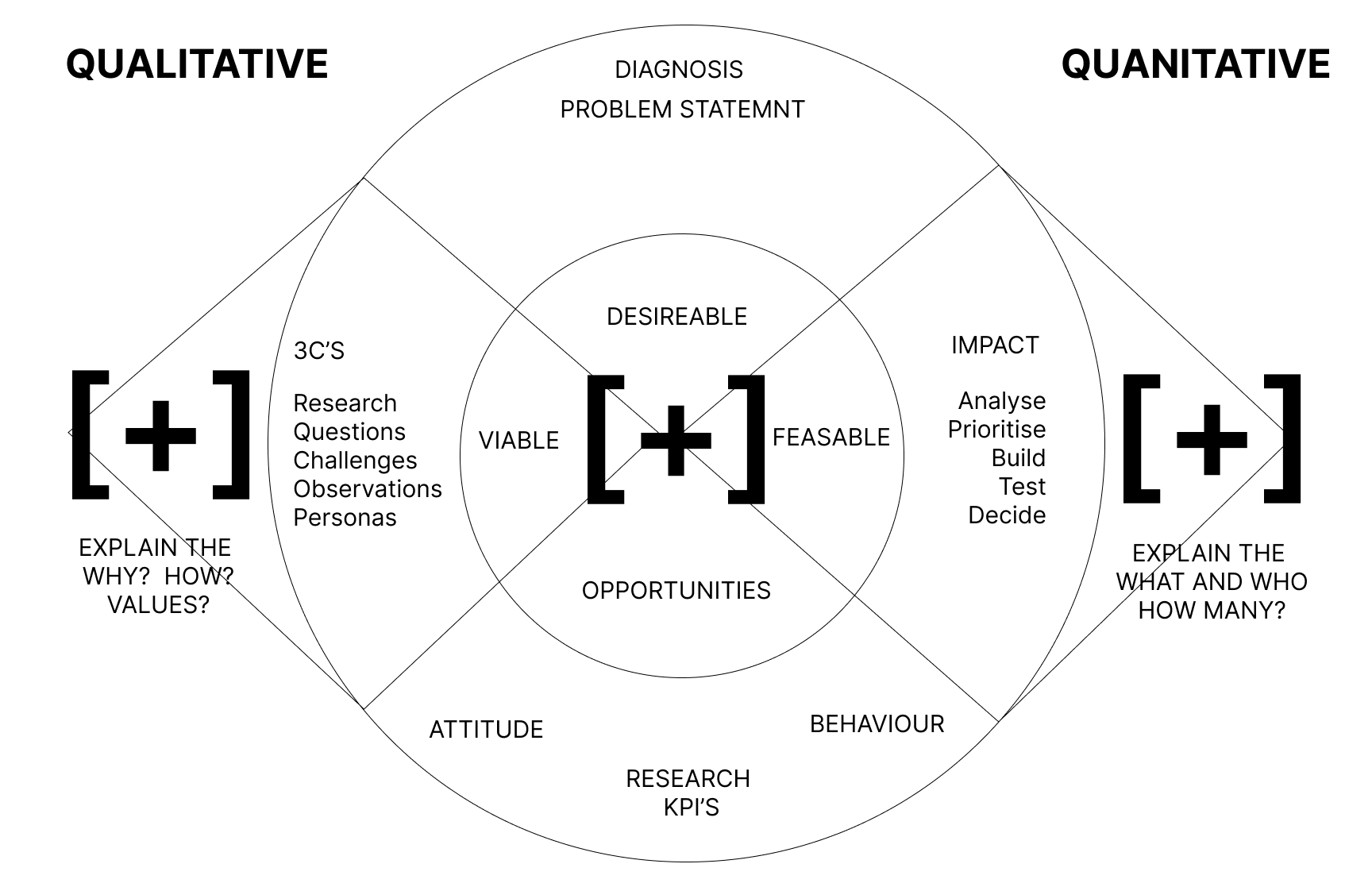
We align on a shared problem and de-risk the strategywith OKR'S supporting the goal,
Align Team or Stakeholder
on a Problem
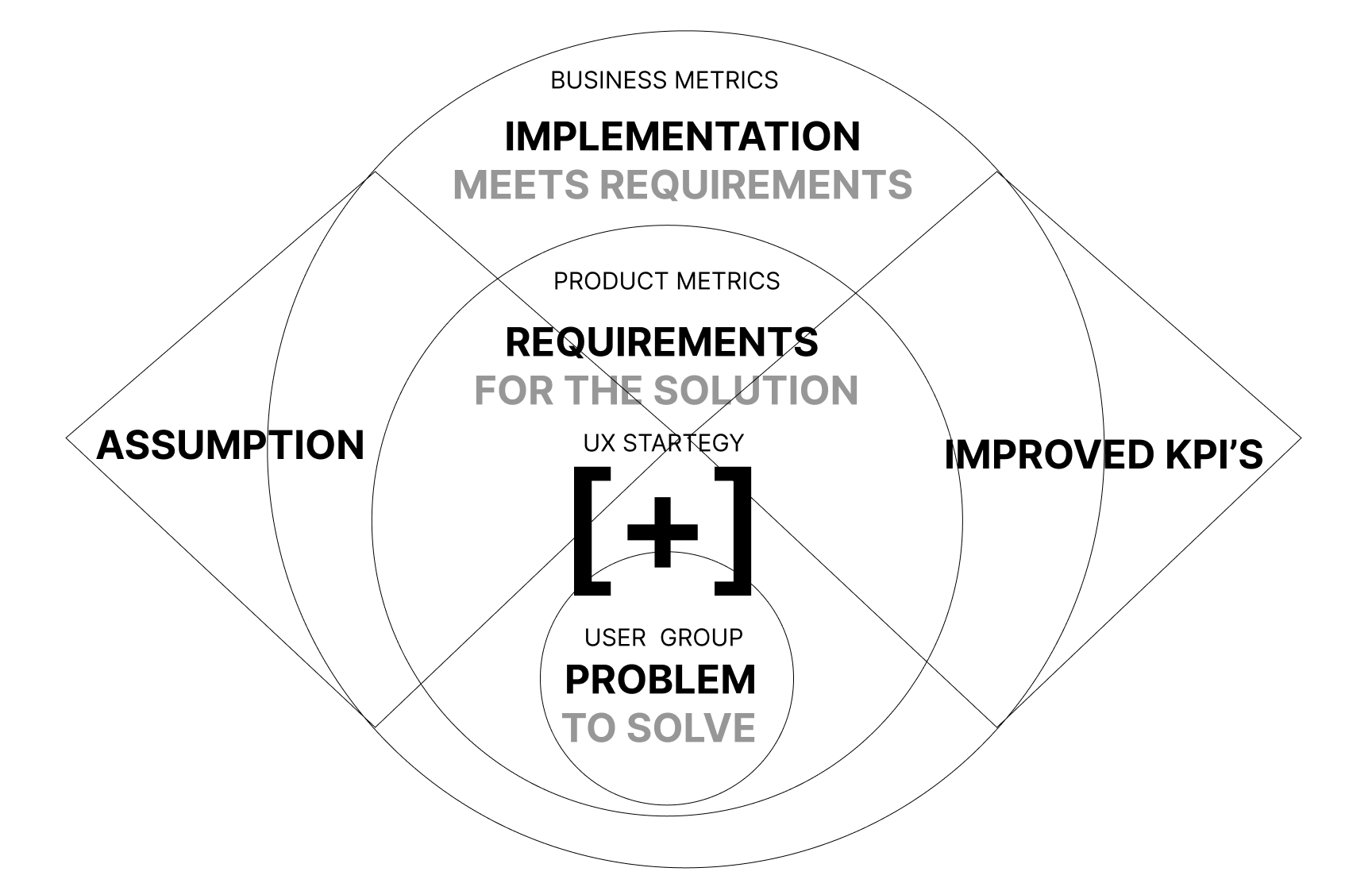
01.8 Define Now-Next-Future Actions
What are we assuming that needs validation?
What are guiding policies for features?
What are 3 topics to refine?